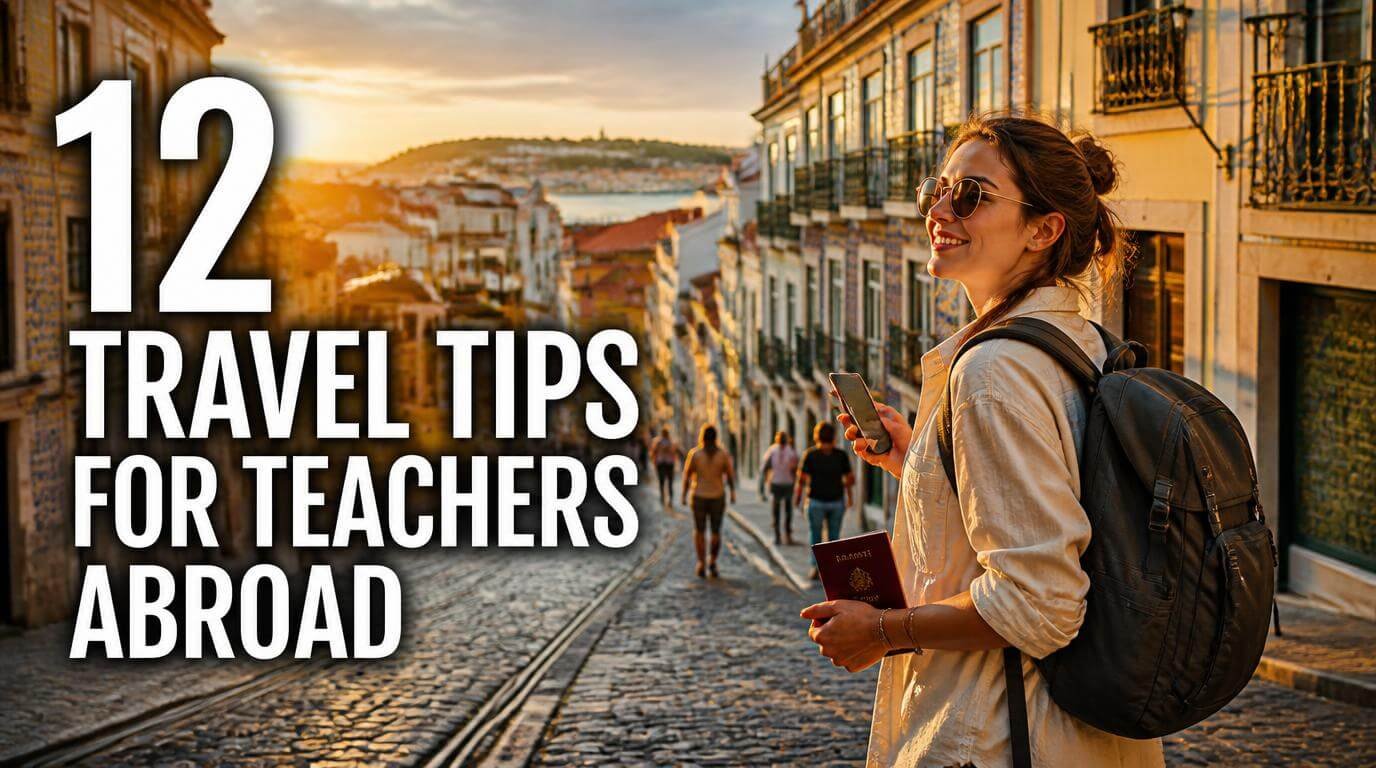
The best travel tips for teachers traveling abroad during first summer break start with one brutal truth: you are more exhausted than you realize. That last bell rings, and your body finally gets permission to crash. But you also have this fire in your chest because you survived your first year, and you want to celebrate somewhere with a different skyline. I booked a flight to Portugal 48 hours after my last faculty meeting. Here’s everything I wish I’d known before I did.
1. Give Yourself a Buffer Before You Fly
Do not book a flight for the day after school ends. I made this mistake, and I spent my first two days in Lisbon sleeping until 2 PM because my body was running on fumes from a full year of early alarms and parent emails. Your adrenaline carries you through June, but it drops hard once you stop moving.
Give yourself at least three to four days at home before departure. Sleep in. Do laundry. Mentally shift from “classroom mode” to “human mode.” You will enjoy every single moment of your trip more if you aren’t recovering from burnout while also navigating a foreign airport.

2. Set a Real Budget Based on Your Actual Teacher Salary
Nobody talks about this enough. Your first-year teacher paycheck is not a tech salary. If your district pays on a 10-month schedule, your summer cash flow might be tight or nonexistent unless you planned ahead. Before you book anything, check your actual bank balance, not what you think is there.
I used YNAB (You Need a Budget) to map out what I could genuinely spend. My total trip budget for 10 days in Portugal was $2,200 including flights. That meant hostels some nights, Airbnbs other nights, and eating where locals eat instead of tourist traps. It was perfect. You don’t need luxury. You need freedom.
3. Book Flights Early, but Be Strategic
Teacher schedules are predictable, which is actually an advantage. You know your last day months in advance. Start watching flights on Google Flights or Skyscanner in February or March. Set price alerts for your target dates.
One trick that saved me almost $300: I flew out on a Tuesday and returned on a Wednesday. Weekend flights during peak summer are brutally expensive because everyone else is booking them too. Shifting your travel days by even 24 hours can make a real difference. Also consider flying into one city and out of another if you plan to move around, open-jaw tickets are often the same price or cheaper.
Travel Tips for Teachers Traveling Abroad: Packing Smart
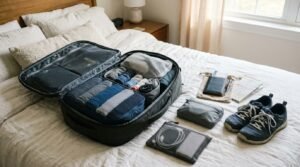
Your instinct will be to overpack because teachers are professional over-preparers. Fight that instinct. I brought a 40L backpack (the Osprey Farpoint 40) and nothing else. No checked bag. No rolling suitcase dragging across cobblestones.
Pack exactly five outfits that mix and match. Roll everything. Bring one nice outfit for a dinner out and comfortable walking shoes you have already broken in. I cannot stress that last part enough. New shoes plus 15,000 daily steps equals blisters that will ruin your trip faster than a delayed flight.
Toiletries and Medications
Buy most toiletries when you land. Shampoo exists in every country. What you should pack from home: any prescription medications with a copy of the prescription, your preferred sunscreen if you’re picky about it, and a basic first aid kit. Pharmacies abroad are usually excellent, but having ibuprofen and band-aids in your bag on day one saves you from a desperate search when jet lag has you foggy.
5. Sort Out Your Documents and Copies
Make digital copies of your passport, travel insurance policy, and credit cards. Email them to yourself and store them in a Google Drive folder you can access offline. I also left physical copies with my parents.
Check your passport expiration date right now if you haven’t already. Many countries require at least six months of validity beyond your travel dates. If your passport is close to expiring, renew it immediately because processing times can stretch to 8 to 10 weeks during spring.
Travel insurance is not optional. I use World Nomads because their plans are affordable and cover trip cancellations, medical emergencies, and lost luggage. One ER visit in a foreign country without insurance can cost thousands.
6. Tell Your Bank You’re Leaving the Country
This sounds so basic, but I forgot. My debit card got frozen on my second day in Porto because my bank flagged a “suspicious” charge at a café. I stood at the counter with a coffee I couldn’t pay for while I called Chase on an international line.
Most banks let you set travel notifications through their app now. Do it before you leave. Also, get a credit card with no foreign transaction fees if you don’t already have one. The Chase Sapphire Preferred or Capital One Venture X are both solid picks for teachers building travel rewards.
7. Plan Loosely, Not Rigidly
You just spent ten months following bell schedules, lesson plans, and curriculum maps. Do not turn your vacation into another binder full of itineraries. I planned two or three “must-do” things per city and left the rest open.
Some of my best memories from that first trip were completely unplanned. A random fado concert in a tiny bar. A beach I found because I took a wrong turn. A three-hour conversation with a retired couple from New Zealand at a hostel. Structure kills spontaneity, and spontaneity is exactly what your teacher brain needs after a year of rigid schedules.

8. Stay Connected Without Breaking the Bank
Your phone plan matters more than you think. I switched to Google Fi before my trip because it works internationally at no extra cost for data. T-Mobile also includes basic international data on most plans. Check what your carrier offers before you land and get hit with roaming charges.
Download offline maps in Google Maps for every city you plan to visit. Download your translation app’s language pack (Google Translate does this well). These two steps alone saved me multiple times when I had weak signal in rural areas or underground metro stations.
9. Don’t Try to See Everything in One Trip
First-time international travelers, especially teachers who are used to maximizing every minute, tend to cram too much into one trip. You do not need to see five countries in two weeks. You will burn out, spend half your time on buses or trains, and remember nothing but transit stations.
Pick one country or one region. Go deeper instead of wider. I spent my entire 10 days in Portugal, splitting time between Lisbon, Porto, and the Algarve coast. I left feeling like I actually knew the place, not like I’d speed-run a checklist.
10. Protect Your Mental Health While Abroad
Here’s something nobody warned me about: solo travel can feel lonely, especially after a year surrounded by 30 kids and dozens of colleagues every single day. The silence hit me harder than I expected on day three.
If this happens to you, it’s normal. Stay at hostels with common areas where conversations happen naturally. Join a free walking tour on your first day in a new city. Text a friend back home when you need to. You don’t have to perform independence 24/7. Enjoying your own company is a skill, and your first solo trip is where you start building it, not where you’re expected to have it mastered.

11. Use Your Teacher ID Abroad
You might not think of it, but your teacher or educator ID can get you discounts at museums, cultural sites, and sometimes even transportation in certain countries. In Italy and France especially, showing a valid teacher ID at national museums has gotten colleagues of mine reduced or free entry.
Bring your school ID badge and consider getting an ISIC (International Student Identity Card) if you’re under 30 or recently completed graduate coursework. Some teacher unions also offer international discount cards. It’s worth checking with your NEA or AFT membership before you go.
12. Come Home with Time to Spare
Do not land the day before school starts. I know teachers who cut it that close and spent their first week back completely wrecked. Give yourself at least a full week at home before any back-to-school obligations begin.
You need time to do laundry, adjust to your time zone, restock groceries, and mentally prepare for year two. That re-entry period is just as important as the trip itself. Protect it like you protect your planning period.
Frequently Asked Questions
How much should a teacher budget for a first international trip?
A reasonable budget for a 7 to 14 day trip is $1,500 to $3,000 depending on your destination. Southeast Asia and Portugal are budget-friendly. Western Europe and Japan cost more. Focus on affordable accommodations, local food, and free walking tours. Your biggest expense will almost always be the flight, so lock that in early when prices are lowest.
What are the best destinations for teachers traveling abroad on a budget?
Portugal, Thailand, Vietnam, Mexico, and Colombia offer incredible value. You get great food, rich culture, and affordable lodging for a fraction of what you’d spend in London or Tokyo. These countries also have strong tourism infrastructure, which makes them easier for first-time international travelers to handle confidently.
Should first-year teachers travel solo or with a group?
Both work, but solo travel gives you the most freedom to rest when you need it, which matters after an exhausting first year. If solo feels intimidating, look into small group tours through companies like Intrepid Travel or G Adventures. They handle logistics while still giving you room to explore independently.
Do teachers get any travel discounts or perks?
Yes, though they vary by country. Many European museums offer teacher discounts with valid ID. NEA and AFT memberships sometimes include travel deals. Websites like educatortraveldeals.com compile seasonal offers. Always ask at ticket counters even if discounts aren’t advertised, because many places honor them informally.
What travel tips for teachers traveling abroad during first summer break matter most?
Honestly, the biggest one is timing. Give yourself rest days before and after the trip. Teachers push through exhaustion all year and then crash hard the moment they relax. Build recovery into your travel plan, not just sightseeing. Your trip will be ten times more enjoyable if you’re not running on empty the whole time.
Is travel insurance really necessary for a short trip?
Absolutely. A single emergency room visit abroad without coverage can cost $2,000 to $10,000 depending on the country. Travel insurance from providers like World Nomads or SafetyWing typically costs $30 to $80 for a two-week trip. That’s a tiny price for peace of mind, especially when you’re far from home and navigating an unfamiliar healthcare system.
Conclusion
Your first summer break as a teacher is sacred. You earned every single day of it, and spending some of those days somewhere new can remind you why you became curious about the world in the first place. So where are you thinking about going this summer?