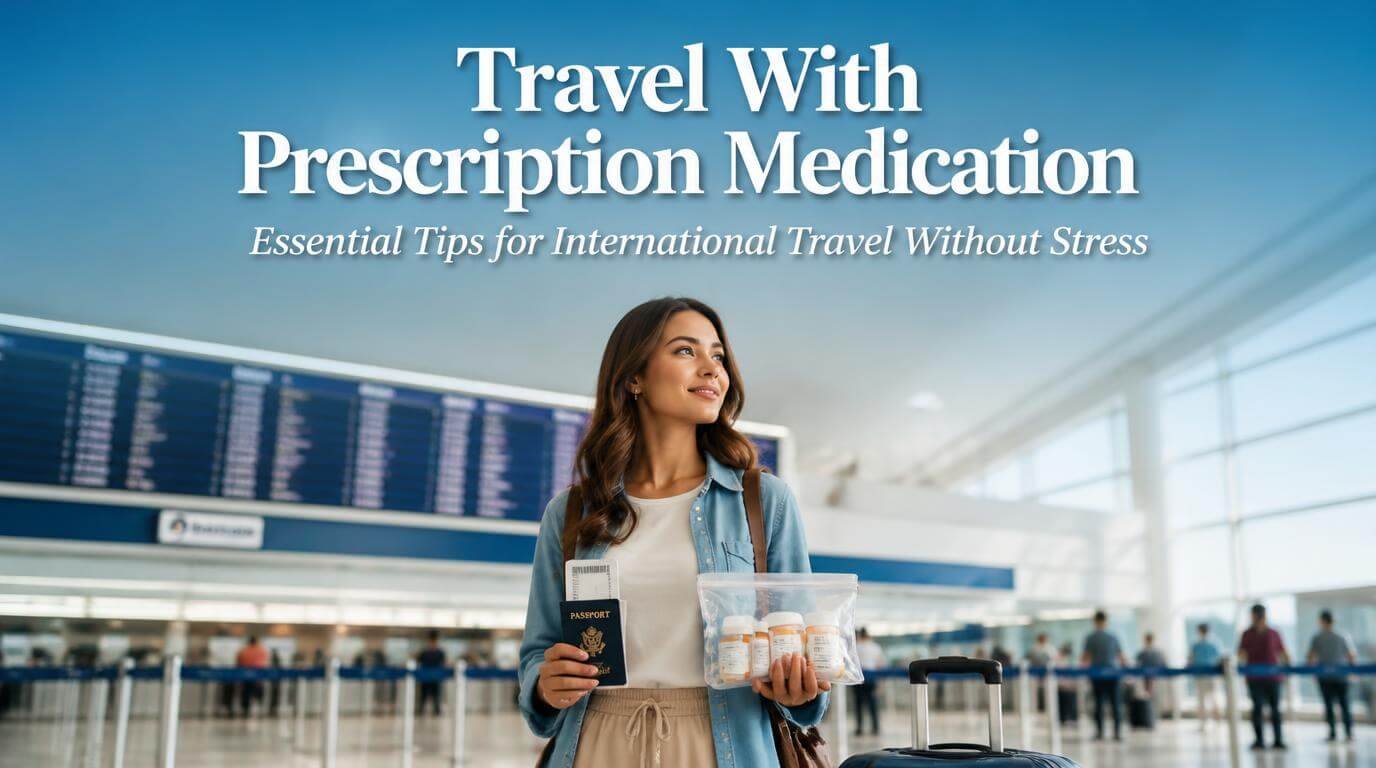
Traveling internationally without losing access to prescription medication is something I never worried about until I almost ran out of my thyroid pills in Lisbon. I had three days of levothyroxine left, no refills, and zero clue how pharmacies worked in Portugal. That panic changed how I prepare for every trip. If you take daily meds and love traveling, this one’s for you.
Start With Your Doctor at Least 6 Weeks Before You Fly
Your doctor is your first and most important stop. Schedule an appointment well before your departure date, not the week of. Ask for a written prescription that includes the generic drug name, dosage, and the reason you take it. Many countries don’t recognize U.S. brand names, so that generic name is everything.
I learned this the hard way. When I walked into a pharmacy in Lisbon asking for “Synthroid,” the pharmacist looked at me like I was speaking another language. Because I basically was. The international generic name, levothyroxine sodium, would have solved the problem instantly.
Also ask your doctor for a formal letter on their letterhead explaining your condition and why you need the medication. Some border agents and customs officers will ask questions, especially if you’re carrying syringes, controlled substances, or large quantities. That letter adds legitimacy and saves you from awkward interrogations.
If your trip is longer than 30 days, request a 90-day supply and ask your insurance company to approve the override. Most insurers will do it for international travel if your doctor sends the request.

Know the Drug Laws of Every Country You’re Visiting
Not every medication that’s legal in the United States is legal abroad. This catches people off guard constantly. Adderall, for example, is classified as a controlled or outright banned substance in Japan, South Korea, and several countries across the Middle East and Southeast Asia. Bringing it across those borders without proper documentation can result in arrest.
Before you pack a single pill, check the International Narcotics Control Board (INCB) guidelines and the specific embassy website for your destination country. The U.S. State Department also maintains country-specific pages with drug regulations.
For controlled substances like opioids, benzodiazepines, or stimulants, some countries require you to obtain an import permit before arrival. Japan requires advance approval through their Ministry of Health. The UAE has an online registration system where you upload your prescription. Don’t skip this step. I’ve read horror stories from travelers who spent nights in foreign detention over medications they legally took every morning at home.
Pack Your Medication the Smart Way
How you pack matters almost as much as what you pack. Always keep medication in your carry-on bag, never in checked luggage. Checked bags get lost, delayed, or rerouted. If your insulin or blood pressure meds disappear into an airline’s baggage void, you’re in serious trouble.
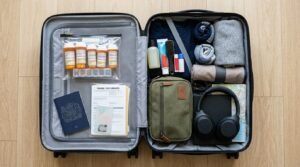
Keep pills in their original pharmacy-labeled bottles. I know it’s tempting to toss everything into a weekly pill organizer to save space, but customs agents want to see your name, the prescribing doctor, and the pharmacy label. That little orange bottle is your proof of legitimacy.
Here’s a trick I picked up after my Portugal scare: I split my supply between two bags. Half goes in my carry-on, the other half goes in my partner’s bag or my personal item. If one bag gets stolen or lost, I still have enough to get by while I figure things out.
For temperature-sensitive medications like insulin or certain biologics, invest in a medical-grade cooling case. The FRIO wallet works without ice or electricity and keeps injectable meds cool for up to 45 hours. It’s been a lifesaver for friends of mine who travel with EpiPens in hot climates.
Traveling Internationally Without Losing Access to Prescription Medication Means Planning for Refills
Sometimes trips get extended. Flights get canceled. You fall in love with a city and stay an extra week. Whatever the reason, running low on medication abroad is a real possibility, and you need a plan before it happens.
Research pharmacies at your destination before you leave home. In many European countries, pharmacists can dispense certain medications without a local prescription if you show your original prescription and doctor’s letter. I’ve personally bought levothyroxine over the counter in both Portugal and Spain just by showing my U.S. prescription label and explaining the situation.
But this doesn’t work everywhere, and it rarely works for controlled substances. In those cases, you might need to visit a local doctor to get a new prescription. Telemedicine services like Teladoc International or local equivalents can sometimes bridge that gap faster than finding a walk-in clinic in a foreign city.
Travel insurance that covers prescription medication replacement is worth every penny. World Nomads and Allianz both offer plans that reimburse emergency prescription costs abroad. Read the fine print, though. Some policies exclude pre-existing conditions or controlled substances.

Understand Time Zones and Dosing Schedules
This is something almost nobody talks about, and it tripped me up during a flight to Tokyo. If you take medication at a specific time each day, crossing multiple time zones throws your schedule off. Do you take it based on your home time? Local time? Somewhere in between?
For most daily medications like SSRIs, statins, or thyroid drugs, gradually shifting to local time over two to three days works fine. Take your dose a couple hours earlier or later each day until you’re aligned. But for time-sensitive medications like birth control pills or certain heart medications, even a few hours can matter. Talk to your doctor about a specific adjustment plan before you leave.
I set two alarms on my phone during international trips. One shows my dosing time in my home time zone, and one shows the adjusted local time I’m working toward. It sounds obsessive, but when you’re jet-lagged and disoriented at 3 AM in a hotel in Osaka, that alarm is the only thing keeping you on track.
Carry Key Documents in Multiple Formats
Paperwork gets lost. Phones die. Bags get stolen. You need redundancy.
Before every international trip, I create a small medication folder that includes printed copies of my prescriptions, my doctor’s letter, my insurance card, and a list of my medications with generic names, dosages, and the condition each one treats. I keep one copy in my carry-on and email a digital copy to myself so I can access it from any device.
Google Drive or iCloud work great for this. I also share the folder with my emergency contact back home so someone else can send me the documents if I somehow lose access to everything.
If you use a pharmacy chain like CVS or Walgreens, download their app. Your prescription history lives there and can serve as backup proof of what you take. FYI, some international pharmacists will accept a screenshot of your prescription history from these apps as informal verification, especially in tourist-heavy areas where they deal with this regularly.

Know Your Rights at Customs and Border Control
Carrying medication through customs shouldn’t be stressful, but it helps to know what to expect. In most countries, you can bring a personal supply of prescription medication, typically defined as 90 days or less, without any special permits. Controlled substances are the exception.
If a customs agent questions your medication, stay calm. Present your doctor’s letter, show the labeled bottles, and explain what each medication is for. Don’t get defensive or argumentative. I’ve been pulled aside twice for carrying a larger-than-usual supply of medication, and both times the agent just wanted to verify my prescriptions matched the bottles.
Some countries require you to declare medications on your customs form. Always declare rather than hide. Trying to sneak medication through, even legal medication, creates problems you don’t want. Transparency is your best protection.
For travelers entering countries with strict drug policies like Singapore, the UAE, or Indonesia, consider contacting the destination’s embassy or consulate before your trip. They can tell you exactly what documentation you need and whether your specific medications require advance approval.
Build a Medication Emergency Kit
Beyond your regular prescriptions, pack a small emergency kit that prepares you for the unexpected. Mine includes a printed list of my medications and allergies translated into the local language (Google Translate works, but having it pre-printed looks more professional), an extra copy of my prescriptions, a few days of OTC basics like ibuprofen and antihistamines, and the phone number for my doctor’s office and pharmacy back home.
I also save the address and phone number of at least two pharmacies near my hotel before I arrive. A quick Google Maps search for “farmacia” or “pharmacy” near your accommodation takes thirty seconds and can save you hours of wandering a foreign city in a medical panic.
IMO, this emergency kit is the single most underrated piece of travel preparation for anyone on daily medication. It takes ten minutes to put together and covers 90% of the scenarios that could go wrong.
Frequently Asked Questions
Can I bring prescription medication on an international flight?
Yes, you can bring prescription medication on international flights. Keep it in original labeled bottles in your carry-on bag. Carry your doctor’s letter and a copy of your prescription. Most countries allow a 90-day personal supply without special permits, though controlled substances may require additional documentation or advance approval from your destination country.
What happens if I run out of medication while traveling abroad?
Visit a local pharmacy first. In many countries, pharmacists can help with common non-controlled medications if you show your prescription label. For controlled substances, you’ll likely need to see a local doctor. Travel insurance that covers emergency prescriptions can reimburse these costs. Telemedicine services can also connect you with a provider quickly.
Are there medications banned in other countries that are legal in the U.S.?
Absolutely. Adderall is banned or heavily restricted in Japan, South Korea, and several Middle Eastern countries. Codeine-containing products face restrictions in parts of Asia and Africa. Always check your destination country’s embassy website or contact them directly before traveling with any controlled or semi-controlled substance.
How do I adjust my medication schedule when crossing time zones?
For most daily medications, gradually shift your dosing time over two to three days until you align with local time. Time-sensitive medications like birth control or certain cardiac drugs need a specific plan from your doctor. Set phone alarms for both your home time zone and the adjusted local time to stay on track.
Should I translate my prescription into the local language?
It helps significantly. Use the generic drug name rather than the brand name, since generic names are more universally recognized. Having your doctor’s letter or a medication summary translated into the local language speeds things up at pharmacies and medical clinics abroad. Google Translate can handle basic translations, but a professional translation adds credibility.
Conclusion
Traveling internationally without losing access to prescription medication takes some upfront effort, but once you build the habit, it becomes second nature. The peace of mind alone is worth every minute of preparation. What’s the one medication-related travel mishap that taught you to plan better?