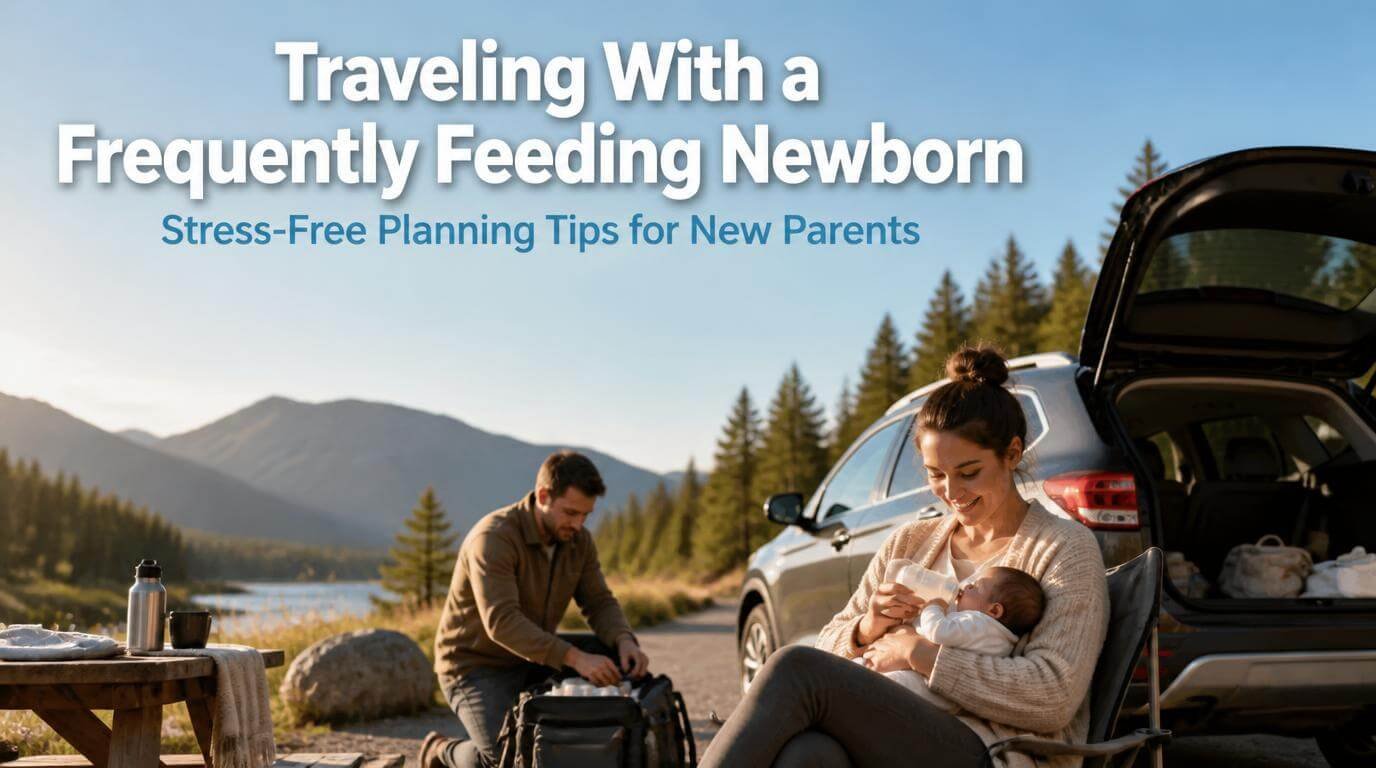
Travel planning tips for parents whose newborn needs frequent feeding can feel impossible to find because most advice assumes your baby sleeps through car rides and eats on a neat schedule. Mine didn’t. Our first road trip with a six-week-old turned into a five-hour meltdown marathon that should have taken three hours. I cried in a Wendy’s parking lot. My husband stared at Google Maps like it personally betrayed him. If that sounds familiar, everything below comes from surviving that trip and every one after it.
Plan Your Route Around Feeding Stops, Not Mileage
Most people plan road trips by distance. You need to plan by feeding intervals. If your newborn eats every two hours, that’s your maximum stretch between stops, period. Forget what Google Maps says about “optimal routes.”
Before our second trip, I sat down and mapped rest stops, parking lots, and shopping centers along our route at roughly 90-minute intervals. I gave myself a buffer because sometimes hunger hits early. I used the Waze app to find gas stations with decent parking lots where I could feed comfortably without being boxed in by semi-trucks. Planning stops this way added maybe 45 minutes to our total travel time, but nobody cried. That alone was worth it.
If you’re flying instead of driving, the same principle applies. Book flights that line up with feeding times, not the cheapest fare. A 6 AM flight sounds great until you realize your baby will be screaming for milk during boarding.
Time Your Departure to Work With Your Baby’s Natural Rhythm
Your baby already has a pattern, even if it doesn’t feel like it. Pay attention for a few days before your trip. When does your newborn have their longest sleep stretch? When do they cluster feed? When are they most alert and fussy?
We started leaving the house immediately after a full feeding, right as our daughter dozed off. That bought us a solid 90 minutes of quiet driving before the next feed. Some parents swear by nighttime departures, and honestly, driving from 7 PM to midnight while the baby sleeps can be brilliant if you can handle the fatigue. I couldn’t, so early morning worked better for us.
The worst thing you can do is leave “whenever you’re ready.” You’ll inevitably hit the road five minutes before a hunger cue, and now you’re pulling over before you even reach the highway.
Travel Planning Tips for Parents Whose Newborn Needs Frequent Feeding: Packing the Right Gear
Packing for a trip with a frequently feeding newborn is its own skill. You need feeding supplies within arm’s reach, not buried in the trunk under a suitcase.
If you’re breastfeeding, pack a supportive nursing pillow (the Boppy travel pillow is compact enough), a lightweight nursing cover if you prefer one, nipple cream, and breast pads. Lots of breast pads. I once soaked through my shirt at a rest stop in rural Virginia and had to change into my husband’s hoodie in July.
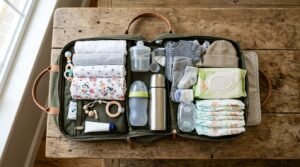
If you’re formula feeding, bring pre-measured formula portions in a dispenser, a thermos of warm water, and at least two extra bottles beyond what you think you’ll need. The Baby Brezza portable formula dispenser saved us more than once. Always pack as if the trip will take twice as long as planned, because with a newborn, it probably will.
A Quick Packing Checklist
- Extra burp cloths (minimum six)
- A change of clothes for you, not just the baby
- Portable bottle warmer or thermos
- Hand sanitizer and wet wipes
- A small blanket for shade or privacy
- Plastic bags for dirty clothes or used bottles
Master the Art of the Roadside Feed
Feeding your newborn on the side of a highway is an acquired skill. It’s not glamorous. It’s not Instagram-worthy. But it keeps everyone sane.
Find a safe spot first. Gas station parking lots, rest areas, and even large church parking lots work. Never pull over on the shoulder of a busy road. I know the crying feels urgent, but safety comes first.
If you’re breastfeeding in the car, climb into the back seat. Unbuckle the car seat harness, pick up your baby, and feed. Do not try to feed a baby while they’re still strapped in. It’s awkward, it doesn’t work well, and you’ll strain your back. I learned this the hard way at a Pilot truck stop outside of Richmond.
Keep the car running for climate control. A hot car in summer or a freezing one in winter makes feeding miserable for both of you. Crack a window if you need airflow but don’t want to blast the AC directly on the baby.
Flying With a Newborn Who Feeds Constantly
Air travel adds a whole layer of complexity. But it’s doable. I flew solo with my daughter at eight weeks, and while I wouldn’t call it fun, we survived.
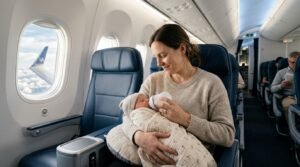
Feed during takeoff and landing. The sucking and swallowing motion helps equalize pressure in your baby’s ears and reduces crying. Start feeding right as the plane begins its taxi, not when you reach altitude. By then it’s too late.
Book an aisle seat so you can get up easily. If you’re breastfeeding, a window seat gives more privacy, but an aisle seat gives you access to the bathroom, the flight attendants, and your diaper bag in the overhead bin. I’d pick access over privacy every time.
TSA allows breast milk, formula, and baby food in quantities exceeding the 3.4-ounce liquid rule. Tell the agent before your bag goes through the scanner. They’ll test it separately, but they won’t take it. I’ve never had a problem with this at any U.S. airport.
Build in Extra Time for Everything
This sounds obvious, but I mean genuinely double your time estimates. Not “add 30 minutes.” Double it.
A feeding takes 20 to 40 minutes. A diaper change takes 10. Burping and settling can take another 15. That single “quick stop” just became an hour. Multiply that by three or four stops, and your five-hour drive is now eight hours.
When we started building real buffers into our travel days, the stress dropped dramatically. We stopped rushing. We stopped snapping at each other. We arrived tired but not destroyed. That shift in expectations was honestly the most important travel planning tip for parents whose newborn needs frequent feeding. Give yourself grace and give yourself time.
Don’t Skip the Practice Run
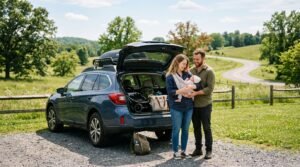
Before your big trip, do a short practice run. Drive 45 minutes to an hour away, stop, feed, and drive back. It sounds silly, but it teaches you things no article can.
You’ll figure out where to stash the diaper bag so it’s actually reachable. You’ll learn whether your baby hates the car seat immediately or after 20 minutes. You’ll discover that your favorite nursing top doesn’t work well in a cramped back seat. These are all things I figured out during a practice trip to my in-laws’ house 40 minutes away, and I was so glad I didn’t learn them on a six-hour drive to the beach.
A practice run also helps you gauge how your baby reacts to feeding in an unfamiliar environment. Some newborns latch fine anywhere. Others get distracted by new sounds, lights, and smells. Knowing your baby’s tendencies ahead of time removes a lot of guesswork.
Talk to Your Pediatrician Before You Go
If your newborn has any feeding challenges, like reflux, tongue tie, or slow weight gain, talk to your pediatrician before traveling. They might suggest adjustments to your feeding schedule or recommend specific supplies.
Our pediatrician told us to feed our daughter slightly more at each session before travel days so she’d go a bit longer between feeds. It worked. She went from eating every 90 minutes to closer to two and a half hours on travel days, which made a real difference.
Your doctor can also give you tips for handling feeding in different altitudes or climates if you’re flying to a destination with significantly different conditions. Dehydration is a real concern for breastfeeding moms at altitude, so bring extra water for yourself too.
FAQs
How often should I stop to feed my newborn during a road trip?
Plan to stop every 1.5 to 2.5 hours, depending on your baby’s typical feeding schedule. Don’t push past your baby’s usual interval just to make better time. A hungry, screaming newborn is unsafe for everyone in the car. Build those stops into your route before you leave.
Can I breastfeed my baby while the car is moving?
No. It’s unsafe and illegal in most states to unbuckle your baby from their car seat while the vehicle is in motion. Always pull over to a safe location, park, and then feed. It takes a few extra minutes, but it keeps your baby secure.
What are the best travel planning tips for parents whose newborn needs frequent feeding on flights?
Feed during takeoff and landing to help with ear pressure. Pack extra formula or plan to breastfeed more often due to dry cabin air. Bring a portable changing pad and extra burp cloths. Request a bassinet seat on long-haul flights if your airline offers them. Gate-check your stroller for convenience.
Should I bring a breast pump when traveling?
If you normally pump, absolutely bring it. A portable pump like the Willow Go or Elvie Stride works well for travel since they’re hands-free and battery powered. Even if you primarily nurse directly, a pump can relieve engorgement if feeding gets delayed or disrupted during transit.
How do I keep formula at the right temperature while traveling?
A good thermos filled with warm water is the simplest solution. Mix the formula fresh at each feeding. Avoid pre-mixing and storing formula for hours, as bacteria can grow quickly. The Ceres Chill bottle keeps water at temperature for up to 20 hours and fits in most diaper bags.
Is it better to drive or fly with a newborn who feeds frequently?
It depends on distance. For trips under six hours, driving gives you full control over stops and timing. For longer distances, flying is faster overall, even with airport hassle. Weigh the total travel time, your baby’s temperament, and your own comfort level before deciding.
Conclusion
Traveling with a newborn who feeds constantly is messy, slow, and sometimes frustrating, but it absolutely doesn’t have to be a nightmare. The real secret is planning around your baby’s needs instead of fighting against them. What was your biggest surprise the first time you traveled with a newborn?