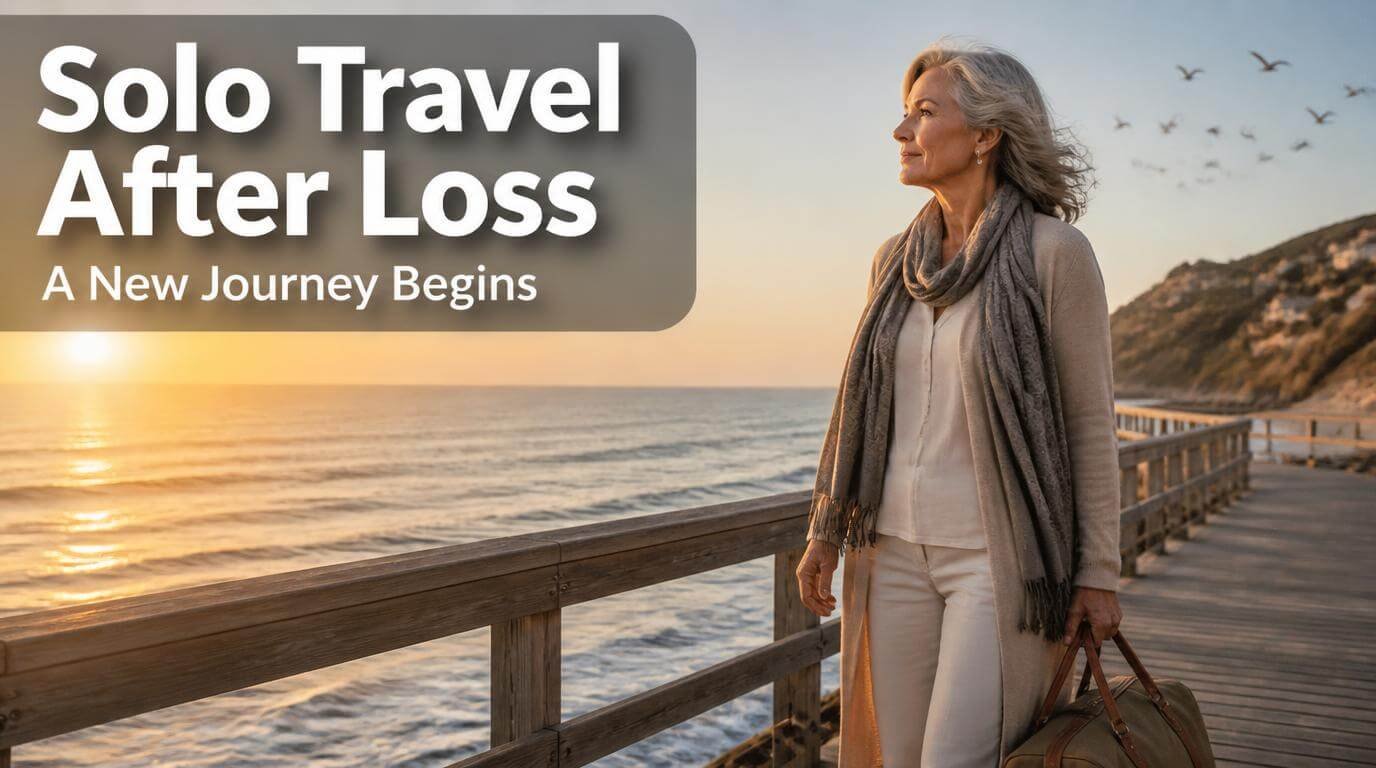
The best travel advice for seniors traveling alone after losing a spouse starts with a truth nobody tells you: the first trip without them will hurt, and that’s okay. My mom lost my dad after 41 years of marriage. For months, she barely left the house. Then one afternoon, she booked a train ticket to a coastal town they’d never visited together. That trip didn’t fix anything, but it cracked something open. She came home different. Not healed. But breathing again.
Why Traveling After Loss Feels So Scary (And Why You Should Do It Anyway)
Grief has a way of shrinking your world down to the size of your living room. Every familiar place holds a memory, and stepping outside that bubble feels like leaving your person behind. I get it. My mom told me she almost canceled her first solo trip three times before she even packed a bag.
But here’s what she learned, and what I’ve seen echoed by dozens of widowed travelers I’ve since spoken with: traveling alone doesn’t mean abandoning your grief. You carry it with you. The difference is that new surroundings give your brain something else to process alongside the sadness. You notice a sunset. You taste food you’ve never tried. You talk to a stranger who makes you laugh for the first time in weeks.
Nobody is saying a vacation cures heartbreak. But sitting still in the same painful space doesn’t cure it either. Movement, even small movement, reminds your body that you’re still alive and that being alive is allowed to include good moments.
Start Small, Closer to Home Than You Think
You don’t need to book a transatlantic flight for your first solo trip. In fact, please don’t. The pressure of a big international itinerary when you’re emotionally fragile is a recipe for overwhelm.
My mom’s first trip was a two-hour train ride. She stayed two nights at a bed and breakfast in a seaside town she’d seen on a travel show. That was it. No elaborate plans. No packed schedule. Just a change of scenery, a few walks, and meals she didn’t have to cook herself.
Start with a weekend getaway within driving distance or a short domestic flight. Pick somewhere you’ve been curious about but never had a reason to visit. The goal isn’t adventure. The goal is proving to yourself that you can do it. Once you realize you can handle a weekend on your own, a week doesn’t sound so impossible. And after a week, who knows?

Choose Destinations That Feel Welcoming to Solo Travelers
Not every destination is equally comfortable when you’re on your own and over 60. Some places just feel friendlier, safer, and more accommodating.
Small towns and resort communities tend to be great for solo seniors because the pace is slower, people are more likely to strike up conversation, and you won’t feel swallowed up by crowds. My mom loved Savannah, Georgia, for this reason. She sat on park benches, wandered through squares, and had three separate strangers invite her to sit at their restaurant table when they saw her dining alone.
Look for places with walkable downtowns, good public transit or easy taxi access, and a reputation for hospitality. Asheville, North Carolina. Victoria, British Columbia. Bath, England. The Amalfi Coast in the off-season. These are spots where a solo older traveler blends right in and locals genuinely welcome you.
Avoid destinations that require a lot of physical intensity or complicated logistics unless you’re already an experienced traveler. There’s time for Machu Picchu later.
Book Accommodations That Encourage Connection
A hotel room can feel very lonely at 7 PM when you’re used to having someone next to you. The type of lodging you choose matters more than you might expect.
Bed and breakfasts are probably the single best option for widowed solo travelers. You get a communal breakfast table where conversation happens naturally. The hosts are usually warm and attentive. And the atmosphere feels more like staying in someone’s home than sleeping in a sterile box.
Small boutique hotels work well too, especially ones with common areas, gardens, or hosted evening wine hours. Airbnb can be hit or miss. A private room in someone’s home can provide that human connection you need. A full apartment rental can feel isolating.
If budget allows, river cruises are phenomenal for solo seniors. Companies like Viking and AmaWaterways attract an older demographic, include meals where you sit with other guests, and handle all the logistics so you can just show up and be present. Several cruise lines have reduced or eliminated single supplements in recent years, which makes solo booking less financially painful.
Travel Advice for Seniors Traveling Alone: Safety Essentials
Safety concerns are valid, and anyone who dismisses them isn’t being helpful. Being a senior traveling solo requires some practical precautions that younger travelers might skip.
Always share your full itinerary with at least two people back home. I set my mom up with Google Maps location sharing so I could see where she was in real time without her having to check in constantly. It gave us both peace of mind.
Keep digital and physical copies of your passport, insurance cards, and emergency contacts. Store the digital copies in your email drafts or a secure app like 1Password. Carry the physical copies separately from the originals.
Register with the Smart Traveler Enrollment Program (STEP) if you’re traveling internationally. It’s free, run by the U.S. State Department, and means the nearest embassy knows you’re in the country if something goes wrong.

A Note on Travel Insurance
Do not skip travel insurance. Seriously. After 65, the risk of a medical event increases, and a hospital stay abroad without coverage can cost tens of thousands of dollars. Companies like Allianz, World Nomads, and GeoBlue offer policies specifically designed for older travelers. Read the fine print on pre-existing condition coverage. Some policies exclude them unless you buy within 14 days of your initial trip deposit.
Handling the Emotional Side of Solo Travel After Loss
Nobody prepares you for the moment you see something beautiful and instinctively turn to share it with someone who isn’t there. It will happen. Probably on day one.
My mom called me crying from a restaurant in Charleston because they brought bread to the table and my dad always used to joke about eating the whole basket before the meal arrived. She wasn’t sad about bread. She was sad about everything the bread represented.
Here’s what helped her, and what I’d pass on to anyone in the same situation: bring a small journal. Not to write essays, just to jot down a few lines each day. What you saw. What you felt. What surprised you. My mom started writing little notes to my dad in hers. “You would have hated this hotel pillow.” “Found a bookshop you’d have spent three hours in.” It became a way to include him without being paralyzed by his absence.
Give yourself permission to have a bad hour. Or a bad day. Grief doesn’t pause because you’re on vacation. But also give yourself permission to enjoy something without guilt. Laughing at a street performer doesn’t mean you’ve forgotten anyone.

Consider Group Travel (But Choose Carefully)
Solo doesn’t have to mean alone every second. Group tours designed for older adults can be a fantastic middle ground, especially for your first few trips.
Road Scholar (formerly Elderhostel) is probably the gold standard here. Their programs attract curious, educated travelers, mostly over 55, and the itineraries focus on learning and cultural immersion rather than partying. My mom did a Road Scholar program in the Canadian Rockies and came home with four new friends she still emails regularly.
Other solid options include Overseas Adventure Travel (OAT), which runs small-group trips with no single supplement, and Intrepid Travel, which has dedicated trips for travelers over 60. Even companies like REI Adventures offer gentler itineraries that work for active seniors who want structure without feeling babysat.
Avoid tours that pack 30 to 40 people onto a bus. They’re exhausting, impersonal, and you’ll spend more time waiting in parking lots than actually experiencing anything.
Practical Packing Tips for Older Solo Travelers
Packing when you’re alone means nobody else can carry the overflow bag. Travel light or pay for it with your back and your stress level.
One carry-on suitcase and one personal item should cover a trip of up to 10 days if you pack smart. Stick to a single color palette so everything mixes and matches. Roll your clothes instead of folding them. Wear your bulkiest shoes on the plane.
A few items my mom now swears by: a lightweight, crossbody anti-theft bag from Travelon for daily use, compression socks for any flight over three hours, a portable phone charger (the Anker PowerCore is great), and a pill organizer that fits in a coat pocket. She also carries a small laminated card with her medications, allergies, and emergency contact in the local language when traveling internationally.
Skip the giant guidebook. Download the Rick Steves Audio Europe app or use Google Maps offline instead. Your phone is your best travel companion now.
Building a New Identity as a Solo Traveler
This is the part nobody writes about, but it matters the most. For decades, you were half of a pair. “We” went on trips. “We” chose restaurants. “We” decided when to go home. Suddenly it’s all “I,” and that shift in identity can feel disorienting.
Traveling alone after losing a spouse forces you to figure out what you actually want. Not what your partner wanted, not the compromise you always made, but your genuine preferences. My mom realized she hates guided museum tours. She’d been going on them for 40 years because my dad loved them. On her own, she discovered she’d rather sit in a café across the street and people-watch.
That kind of self-discovery sounds small, but it’s actually enormous. You start rebuilding a sense of self that exists independently of your loss. You’re not replacing your old life. You’re learning what this new chapter looks like on your own terms.

Frequently Asked Questions
Is it safe for a senior to travel alone after losing a spouse?
Yes, with the right precautions. Share your itinerary, carry travel insurance, keep copies of important documents, and choose destinations known for safety and walkability. Millions of seniors travel solo every year without incident. Starting with familiar, well-traveled destinations helps build confidence before you take on anything more adventurous or remote.
How soon after a spouse’s death should you consider traveling?
There’s no universal timeline. Some people feel ready after a few months. Others need a year or more. The key indicator is whether you want to go, not whether you feel you should. If the idea of a trip sparks even a tiny flicker of curiosity rather than pure dread, that’s probably a sign you’re ready to try something small.
What are the best types of trips for recently widowed seniors?
Short domestic getaways, bed and breakfast stays, river cruises, and structured group tours like Road Scholar work best for the first few trips. They provide social opportunities, minimize logistical stress, and let you ease into solo travel without feeling overwhelmed or isolated in a hotel room every evening.
How do you deal with loneliness while traveling alone after loss?
Bring a journal, stay in social accommodations like B&Bs or small group tours, and don’t be afraid to strike up conversations with strangers. Many widowed travelers find that people are kinder than expected when you’re open about your situation. Scheduling a nightly phone call with a friend or family member also helps bridge the gap.
What travel advice for seniors traveling alone should someone follow on a budget?
Travel during shoulder season for lower prices. Use AARP discounts on hotels and car rentals. Book flights midweek. Choose destinations where the cost of living is lower, like Portugal, Mexico, or Southeast Asia. Companies like OAT waive single supplements, which can save hundreds of dollars compared to cruise lines that charge solo travelers extra.
Conclusion
Grief doesn’t come with a roadmap, but sometimes an actual road helps you find your footing again. If you’ve been thinking about that first solo trip and keep talking yourself out of it, maybe this is the nudge you needed. What destination has been quietly calling your name?